
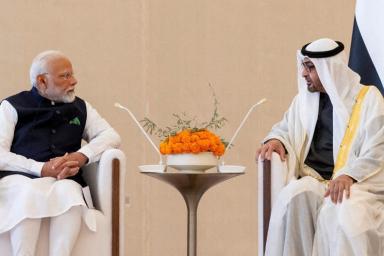
Prime Minister Narendra Modi’s upcoming visit to the United Arab Emirates is far more than a diplomatic courtesy—it’s a pivotal moment for India’s strategic, economic, and human interests in one of the world’s most dynamic regions.
As part of a broader five-nation tour across Europe and West Asia (May 15–20), the Abu Dhabi leg stands out for its high-stakes agenda: deepening defence ties, securing energy supplies, and strengthening diaspora connections at a time of heightened geopolitical uncertainty.
🔐 Defence Cooperation: Building a New Strategic Framework
The visit builds directly on the Letter of Intent signed during UAE President Sheikh Mohamed bin Zayed Al Nahyan’s visit to India in January 2026. This time, both nations aim to convert intent into action through:
✅ A comprehensive defence industrial cooperation agreement
✅ Enhanced collaboration in cybersecurity and counter-terrorism
✅ Joint exercises and knowledge-sharing in special operations
✅ Streamlined defence technology transfers and co-production
For India, the UAE represents not just a partner—but a potential logistics and strategic hub for operations across the wider Middle East. With Gulf nations increasingly looking beyond traditional alliances, New Delhi sees an opportunity to cement long-term trust with Abu Dhabi.
🎯 Strategic Insight: India’s growing defence engagement with Gulf states reflects a broader shift toward “multi-alignment”—building issue-based partnerships without being tied to any single power bloc.
⚡ Energy Security: Anchoring India’s Growth in Uncertain Times
Energy remains the bedrock of India-UAE relations—and the timing couldn’t be more critical.
🔹 The UAE is among India’s top suppliers of oil and natural gas
🔹 A reported $3 billion LNG deal underscores Abu Dhabi’s role as a reliable long-term partner
🔹 With West Asian tensions disrupting global markets, India is prioritizing supply chain resilience over short-term pricing
Recent attacks on UAE infrastructure—including the Fujairah Petroleum Industries Zone—have reinforced a shared understanding: regional stability is non-negotiable for energy security. PM Modi’s swift condemnation of those attacks signaled New Delhi’s commitment to standing with Abu Dhabi—not just in words, but in strategic solidarity.
🌍 Geopolitical Context: Navigating a Shifting Gulf
India’s outreach to the UAE also carries subtle but significant geopolitical weight:
🔸 Pakistan has been actively re-engaging Gulf states, including defence dialogues with Saudi Arabia and Qatar
🔸 The UAE’s recent decision not to roll over Pakistani debt signals evolving regional priorities
🔸 Against this backdrop, India aims to ensure its strategic influence in the Gulf remains robust and future-ready
This isn’t about zero-sum competition—it’s about ensuring India has a strong, trusted voice in conversations that shape the region’s security and economic architecture.
👥 The Human Dimension: Protecting India’s Diaspora
Beyond flags and frameworks, this relationship has a deeply personal stake: over 3.5 million Indians live and work in the UAE.
💼 They contribute billions of dollars annually in remittances
🏥 They rely on bilateral agreements for healthcare, legal protection, and labour rights
🤝 Their welfare is a top priority for New Delhi’s foreign policy
For India, strong ties with the UAE aren’t just about geopolitics—they’re about protecting the dreams, dignity, and livelihoods of its citizens abroad.
🔮 What to Watch During the Visit
🔹 Signing of a Defence Industrial Cooperation Roadmap
🔹 Announcements on renewable energy partnerships (solar, green hydrogen)
🔹 New initiatives for skill development and employment for Indian workers in the UAE
🔹 Potential MoUs on digital infrastructure, AI governance, and startup collaboration
💡 The Bigger Picture
PM Modi’s UAE visit reflects a mature, multi-dimensional foreign policy—one that balances hard security with soft power, economic pragmatism with human empathy.
In a world of volatility, India and the UAE are choosing to build resilience through partnership. And that’s a story worth watching.