
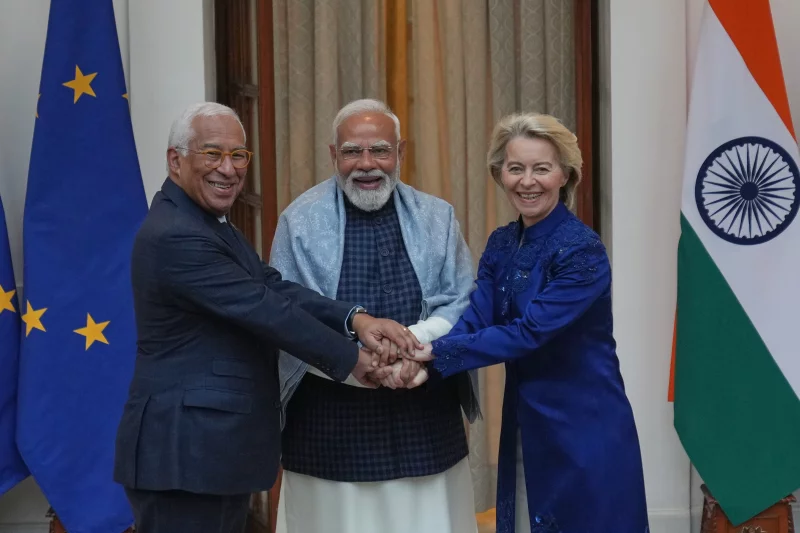
Earlier in January 2026, India and the European Union reached a landmark Free Trade Agreement (FTA) after nearly two decades of negotiations, marking one of the most important trade milestones for both sides. The deal was unveiled at the 16th India–EU Summit in New Delhi, with leaders from both parties calling it the “mother of all deals.”
📊 What the Trade Deal Covers
- Date of conclusion: 27 January 2026, after long-running talks.
- Scope: A comprehensive free trade agreement covering goods, services, customs procedures, investment, and regulatory cooperation between India and the EU.
- Tariff cuts:
- The deal calls for eliminating or reducing tariffs on most goods traded between both sides — including machinery, textiles, apparel, leather, gems and jewellery, chemicals, and consumer products — over time.
- Reportedly, tariffs will be cut on almost 97% of EU tariff lines by value, while India will offer preferential access on over 99% of its export value to the EU.
🛠️ Key Features and Economic Impact
- Huge market coverage: Together, India and the EU represent a market of about 2 billion people and approximately a quarter of global GDP — making this one of the largest trade pacts in the world.
- Sector benefits:
- India’s textiles, leather, marine products, and gems & jewellery are expected to benefit from easier entry into European markets.
- The EU’s manufacturing and technology sectors may see expanded access into India in areas like electrical goods, machinery, and pharmaceuticals.
- Strategic ties: The deal goes beyond tariffs, aiming to strengthen investment, services cooperation, supply chains, and economic integration between India and the EU.
📆 Next Steps and Implementation
Although the deal has been concluded, it still needs to go through formal approval processes on both sides — including consent by the European Parliament and final ratification by relevant EU and Indian authorities — before it can enter into force, likely in early 2027.
📌 Key Facts at a Glance
What: India–EU Free Trade Agreement (FTA) — a major bilateral trade pact covering goods, services, and investment.
When concluded: 27 January 2026 after nearly 20 years of negotiations.
Market size: Covers a combined market of roughly 2 billion people and about 25% of world GDP.
Tariff liberalisation: Cuts or removes duties on the vast majority of traded goods by value.
Pending approval: Implementation requires legal approval by both the EU and Indian governments before it becomes effective.
🧠 Why It Matters
Industrially: Key sectors such as textiles, pharmaceuticals, engineering goods, and services stand to benefit from increased competitiveness and market access.
Economically: The deal opens up vast markets on both sides, potentially doubling EU exports to India by 2032 and giving Indian exporters easier access to European consumers.
Strategically: It strengthens India’s role as a key player in global trade and helps the EU diversify its economic partnerships amid global trade tensions.