
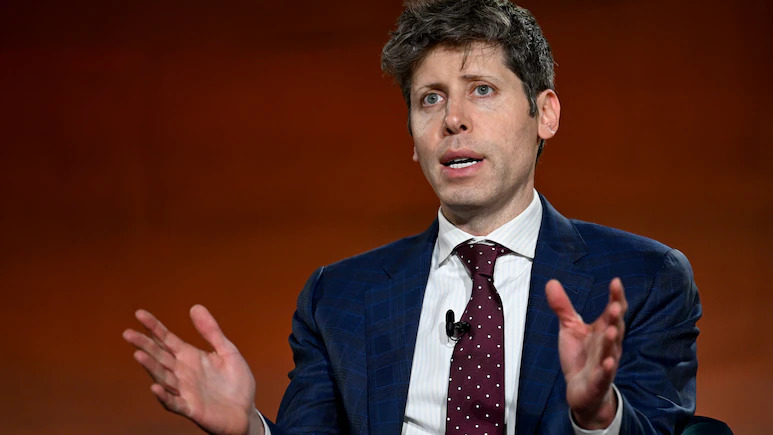
A fresh debate around the future of longevity science has emerged after renewed attention on OpenAI CEO Sam Altman’s major investment in anti-ageing research. The discussion gained momentum following a recent post on X by finance and technology commentator Ricardo, highlighting Altman’s growing involvement in biotechnology through Retro Biosciences — a startup focused on extending healthy human lifespan.
According to reports from Business Insider, Altman personally invested nearly $180 million to help launch Retro Biosciences before supporting a larger funding round that reportedly pushed the company’s valuation into the billions.
At the core of Retro’s research is an emerging scientific field known as partial cellular reprogramming. The concept aims to reverse certain biological signs of ageing by restoring older cells to a more youthful state without fully converting them into stem cells.
While the science remains highly experimental, researchers believe the technology could eventually address the root causes of ageing itself rather than treating diseases individually. Conditions such as Alzheimer’s disease, cancer, and heart disease become significantly more common with age, leading scientists to explore whether slowing cellular ageing could reduce the risk of multiple illnesses simultaneously.
What makes Retro Biosciences particularly notable is its close integration with artificial intelligence.
OpenAI recently revealed that it developed a specialised AI model called GPT-4b micro to support Retro’s scientific work. The model was designed to assist researchers in redesigning proteins linked to cellular reprogramming, a process traditionally requiring lengthy laboratory experimentation.
According to OpenAI, the AI system dramatically improved research efficiency by accelerating experiments that previously took weeks. Researchers also reported that the model proposed entirely new protein designs that may not have been identified through conventional methods alone.
Experts believe this represents a major shift in modern biological research. Rather than replacing scientists, AI is increasingly being used as a collaborative tool capable of identifying patterns, testing hypotheses, and accelerating scientific discovery.
Retro Biosciences has already begun exploring therapies connected to age-related diseases, including Alzheimer’s. However, scientists caution that practical anti-ageing treatments for humans are still years away and that many promising laboratory breakthroughs fail during clinical testing.
Altman has frequently spoken about the broader role artificial intelligence could play in healthcare. Across the world, hospitals, research institutions, and medical companies are experimenting with large language models for clinical support, research analysis, administrative automation, and diagnostic assistance.
Supporters argue that AI could eventually lower healthcare costs, improve medical accuracy, and expand access to healthcare expertise globally. Critics, however, warn that serious concerns around regulation, patient privacy, and medical reliability must still be addressed.
The longevity industry has increasingly attracted attention from some of the world’s wealthiest technology investors. Amazon founder Jeff Bezos has backed Altos Labs, another major anti-ageing research company, while investor Peter Thiel has also funded longevity-focused ventures.
Still, Altman’s approach stands apart because it combines large-scale AI development with advanced biotechnology under a closely connected ecosystem.
Whether Retro Biosciences succeeds remains uncertain. Yet Altman’s aggressive investment signals a growing belief within Silicon Valley that artificial intelligence could dramatically accelerate breakthroughs in medicine — and potentially redefine how humanity approaches ageing in the future.