
For many Indians living abroad, heritage often arrives through familiar channels: the aroma of home-cooked meals, the rhythm of festival celebrations, the comfort of language spoken at family gatherings.
But what about the intellectual inheritance? The rigorous, original, world-shaping knowledge that ancient India produced—knowledge that remains largely invisible, locked away in Sanskrit, waiting to be rediscovered.
A powerful new conversation is emerging—one that invites the Indian diaspora to look beyond nostalgia and reconnect with a civilisation that pioneered breakthroughs in astronomy, mathematics, surgery, governance, architecture, and the arts, centuries before similar ideas emerged elsewhere.
🧠 Ancient India’s Knowledge: Not Myth, But Method
When we think of ancient India, popular imagination often drifts toward spirituality, philosophy, or mythology. And while those traditions are profound, they represent only one dimension of a far richer intellectual landscape.
As scholar and author [Name] notes in a recent reflection:
“I have spent much of my adult life thinking about ancient India — not as a place of myth or nostalgia, but as a civilisation that produced some of the most rigorous, original thinking the world has ever seen.”
The goal? To bring 14 extraordinary Sanskrit texts—non-fiction works of extraordinary range and precision—into the light for curious readers, especially younger generations growing up across the diaspora.
These are not religious scriptures. They are technical manuals, scientific treatises, and practical guides written by some of the finest minds of the ancient world.
🔬 14 Texts, 14 Windows into Genius
Here are just a few highlights from this remarkable corpus:
🌍 Aryabhatiya (476 CE) – Aryabhata
- First proposed that Earth rotates on its own axis—over 1,000 years before European acceptance
- Developed an elegant system for encoding massive numbers into memorable words
- India’s first satellite (1975) was named in his honor
➗ Lilavati (12th Century) – Bhaskaracharya
- A mathematics textbook where every problem is a poem in Sanskrit
- Addressed to a girl—remarkable in an era when girls’ education was rare globally
- Anticipated calculus concepts that Newton and Leibniz would formalize 500 years later
🏛️ Arthashastra – Kautilya (Chanakya)
- A comprehensive manual for statecraft, economics, diplomacy, and justice
- Considered lost for centuries until rediscovered in a Mysore library in 1909
- Every modern political strategist or management consultant citing Sun Tzu should know Kautilya
🎭 Natya Shastra (200 BCE–200 CE) – Bharata
- Foundational text for India’s classical performing arts
- Also a timeless guide to writing and storytelling
- Lists ten mistakes every writer must avoid—rules as relevant today as 2,000 years ago
🏗️ Mayamata (Chola Period, 11th–13th Century)
- An architecture handbook from Tamil Nadu
- Describes how to choose building sites, plan cities, and construct temples using precise mathematical ratios
- Opens with a profound declaration: “The Earth is our first home, and it is with her permission that any building—home or temple—can be built.”
🩺 Charaka Samhita & Sushruta Samhita – Foundations of Ayurveda
- Charaka: Focused on medicine and the nature of disease
- Sushruta: Described over 300 surgical procedures and 120 instruments
- Widely credited as the originator of rhinoplasty (reconstructive nose surgery)—a technique the West “rediscovered” in the 18th century
🌏 Why This Matters for the Diaspora
The Indian diaspora in the United States is the most educated immigrant community in the country. It has produced scientists, surgeons, engineers, writers, entrepreneurs, and policymakers at an extraordinary rate.
And yet, for many diaspora families, the connection to classical Indian knowledge—the intellectual inheritance, distinct from religious or culinary traditions—has quietly thinned.
💡 What Changes When We Reconnect?
✅ Identity with Depth: Beyond food and festivals, children gain a sense of the intellectual contributions their ancestors made to human progress.
✅ Confidence in Innovation: Learning that an Indian mathematician solved equations 500 years before calculus was “invented” in Europe isn’t about pride—it’s about perspective.
✅ Bridging Worlds: Understanding ancient Indian approaches to governance, sustainability, or storytelling can inform modern challenges in technology, policy, and creativity.
✅ Cultural Continuity: Passing down knowledge—not just tradition—helps younger generations feel rooted while thriving globally.
“When a child in Houston or New Jersey or the Bay Area reads that an Indian surgeon was performing reconstructive procedures two millennia ago… something shifts. Not pride, exactly. Something quieter and more useful: a sense of where they come from.”
📚 Making Ancient Knowledge Accessible
The challenge isn’t just preservation—it’s translation, interpretation, and engagement.
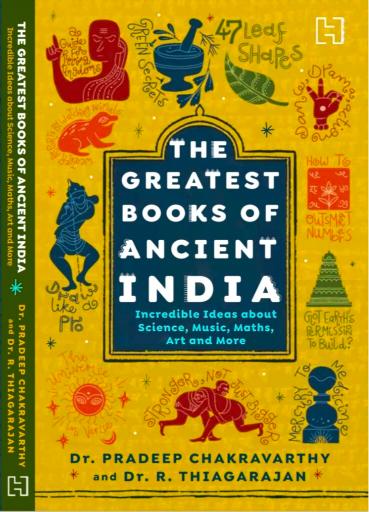
Initiatives like The Greatest Books of Ancient India (Hachette India, 2026) aim to:
- Present complex Sanskrit texts in clear, vivid language
- Highlight practical applications alongside historical context
- Inspire curiosity without demanding scholarly expertise
For diaspora parents, educators, and community leaders, this opens powerful opportunities:
- Introduce these texts in weekend language schools or cultural programs
- Use them as conversation starters about science, ethics, and innovation
- Connect ancient wisdom to contemporary careers in STEM, arts, and public service
🤝 A Call to the Global Indian Community
Reclaiming ancient India’s intellectual legacy isn’t about looking backward—it’s about equipping the next generation to move forward with confidence, creativity, and context.
Whether you’re a parent in Toronto, a student in London, a professional in Singapore, or a retiree in Melbourne: your heritage includes more than recipes and rituals. It includes ideas that shaped the world.
✨ How You Can Engage
🔹 Read: Explore accessible introductions to ancient Indian texts
🔹 Share: Discuss these ideas with children, students, or community groups
🔹 Create: Draw connections between ancient insights and modern challenges
🔹 Advocate: Support initiatives that make classical knowledge accessible globally
🌟 Final Thought: Knowledge as Belonging
In a world where diaspora identities can feel fragmented—pulled between cultures, languages, and expectations—reconnecting with ancient India’s intellectual heritage offers something rare: a sense of belonging rooted in contribution.
It reminds us that the civilisation we carry within us didn’t just survive history—it helped write it.
And that’s a story worth telling, again and again, across oceans and generations.
Because when we know what ancient India knew, we don’t just honor the past—we empower the future.